State Wildlife Action Plan

Conservation-by Tim Manns

Protecting American Bitterns at Northern State Recreation Area

Skagit birders know that the best place to hear and see American Bitterns is just east of Sedro-Woolley at the Northern State Recreation Area (NSRA) wetland along State Route 20. Puget Sound Bird Observatory volunteers doing the Wetland Secretive Bird Survey readily detect bitterns there and all but one of the survey’s other target species. Six years ago, daily walkers at NSRA alerted Skagit Audubon to multiple bittern pairs likely nesting in the field between the wetland levee and Helmick Road. In 2019 there were credible reports of mowing destroying bittern nests in the field. The following year Skagit Audubon attempted to more specifically document bitterns’ presence and use. We estimated 2 or 3 pairs were nesting in the tall grass, and we provided County Parks with a map suggesting an area to be left unmown. Over the opposition of people who considered the uncut field unsightly and of others who preferred baseball diamonds there, County Parks Director Brian Adams left most of the field unmown. Early last month, Brian retired.

“In 1991, Skagit County purchased a 726-acre portion of the former Northern State Hospital from the State of Washington for the purpose of developing a major regional recreation facility for the citizens of Skagit County and beyond” (Master Plan 9-27-02.doc). This county park encompasses what had been the farm raising food for Northern State Hospital and other state mental health institutions. In 2002 a large group of stakeholders convened to develop a master plan for Northern State Recreation Area. The plan called for constructing 5 baseball diamonds in the field off Helmick Road near the park’s main access (Map: Master Plan 9-27-02.doc). It also called for de-channelizing Hansen Creek just west of the field and constructing a dike to keep the creek’s multiple new channels away from the planned ballfields. The Upper Skagit Indian Tribe’s Natural Resources Department accomplished the creek restoration project in 2010, including planting thousands of trees and shrubs. Hansen Creek reoccupied its flood plain to the benefit of salmon and many other species. Beavers arrived and soon expanded the wetland creating excellent habitat for bitterns, rails, ducks, herons, marsh wrens, and more.

Skagit County Parks lacked funding to build the planned ballfields on Helmick field, and bitterns eventually found the unmown field to be fine nesting habitat adjacent to their foraging marsh. In addition to the diverse birds, this multi-use public park has many human stakeholders. How different segments of the public want to use the park shifts with time. For some people NSRA offers great hiking or a place for daily dog-walking, a wildly popular disc golf course or a cross-country track route - - and a good spot for observing diverse birdlife. At this time of year there are people who go to NSRA every evening to listen and watch for the Helmick field bitterns.

Now the City of Sedro-Woolley is proposing an agreement with the county to build four Little League ballfields on the Helmick field to replace ones severely damaged at the city’s Riverfront Park every time the Skagit floods. The proposal also calls for additional parking. During the Skagit County Parks & Recreation Advisory Board’s April 16th meeting, Sedro-Woolley’s Parks & Facilities Director presented the city’s proposal with the new mayor sitting nearby. After I described the importance of Helmick field for nesting bitterns, another parks board member joined me in proposing alternate nearby locations for the four ballfields that would avoid disturbing the bitterns. The proposed parking expansion is close to Helmick Road and away from the area the bitterns use.

Sedro-Woolley’s landscape architect will map these alternatives, and the city’s representative will come back to the parks board. In the meanwhile, Skagit Audubon will update our understanding of bitterns’ current use of the Helmick field. It is timely now for Audubon members and friends who want to see the field continue to be available for nesting bitterns to write the City of Sedro-Woolley. Address letters to Parks and Facilities Director, 325 Metcalf Street, Sedro-Woolley, WA 98284 with a copy to Mayor JoEllen Kesti, 694 Brickyard Boulevard, Sedro-Woolley, WA 98284.

Roadless Rule

The September and October 2025 issues of Skagit Audubon Conservation Notes discuss this federal rule established 25 years ago which the federal administration is in the process of rescinding (Sept25ConservationNotesUpdated083025.pdf and Oct25ConservationNotes.pdf). The Roadless Rule exempts 58 million acres of roadless and unlogged U.S. Forest Service lands from clearcutting and road building, including almost 2 million acres in Washington. If the administration honors the requirement to solicit public comment, the draft Environmental Impact Statement for rescinding the rule should have appeared by the time you’re reading this. If we are allowed comment, please do so when you find or are sent instructions. These public lands belong to us all. They are vital habitat for a myriad of birds and other creatures and also provide recreational experiences in nature for millions of people.

State Wildlife Action Plan (SWAP)

In April the US Fish and Wildlife Service approved Washington Department of Fish & Wildlife’s (WDFW) ten-year update of the State Wildlife Action Plan. Last year we had the opportunity to review and comment on the draft. The plan analyzes which wildlife species (and now also plants) are or may be in decline in Washington and describes actions to stem their decline and avoid the much greater expense of recovering species near extinction. The plan makes Washington eligible for federal grants to help with implementation. The updated SWAP should appear on WDFW’s website in May: State Wildlife Action Plan (SWAP) | Washington Department of Fish & Wildlife.

For more information about conservation issues Skagit Audubon is tracking, go to  Conservation notes & letters — Skagit Audubon Society. Audubon members can advocate for regional and national protection of birds and other wildlife and their habitat by responding to action alerts from Washington Audubon and National Audubon. Enroll in Audubon Washington’s Action Network at Join Our Action Network | Audubon Washington. The National Audubon website (Advocacy & Action | Audubon) has abundant information on Audubon’s current conservation campaigns. Sign up to receive national alerts (Join Our Action Network | Audubon).
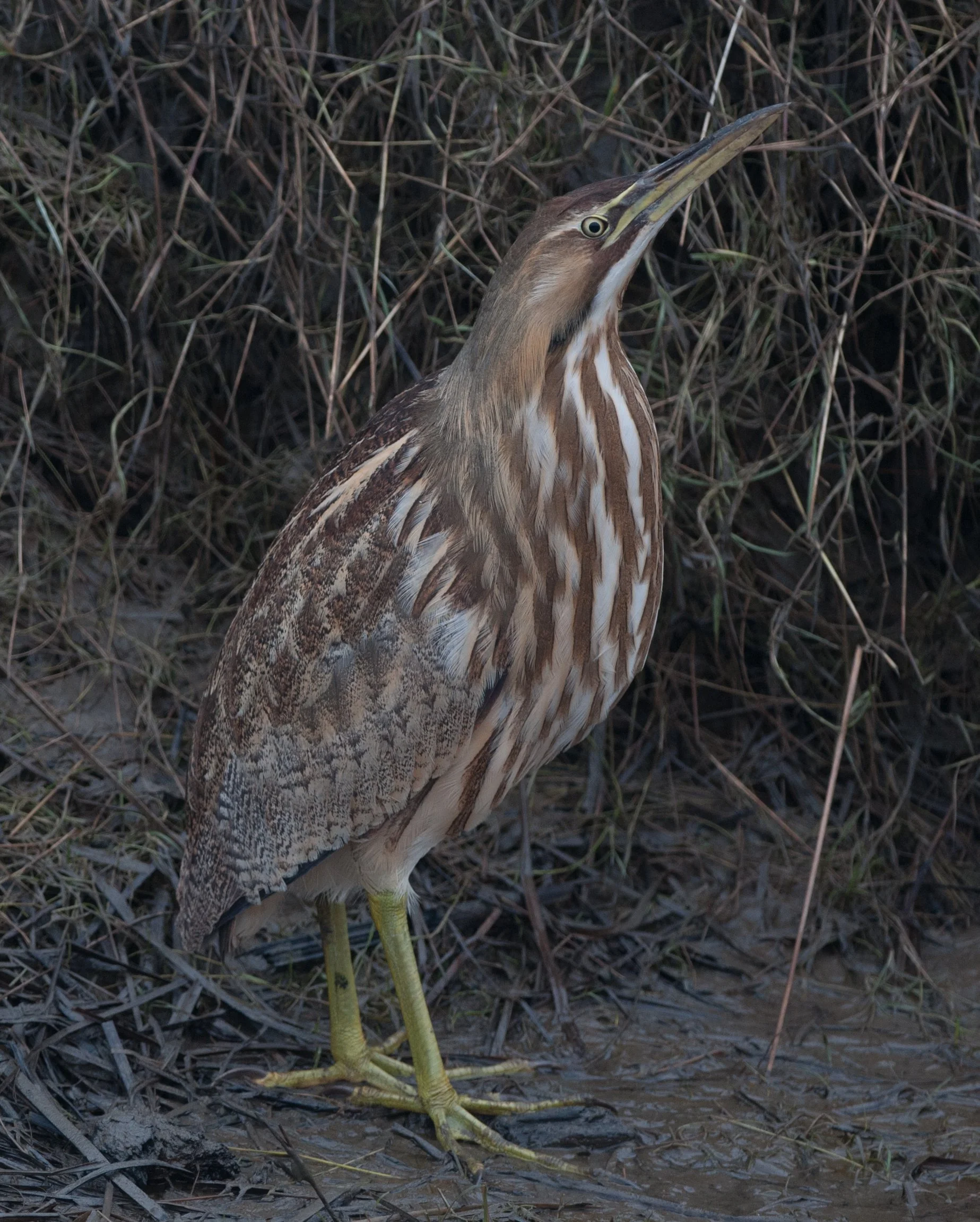
Photo credit: American Bittern by Joe Halton

Conservation, by Tim Manns

Keep the Carbon Commitment Act: Vote No on Initiative-2117

On October 18th the Seattle Times ran a detailed article on what would result were Initiative 2117 to pass (WA’s carbon market pumps billions of dollars to state projects. What happens if it vanishes? | The Seattle Times). Passage of 2117 would repeal the Climate Commitment Act of 2021.This newsletter’s September issue (Sept24Flyer.pdf (squarespace.com)) gives the background on the initiative whose defeat is a high priority for Audubon Washington. Why? The cap-and-invest program which the act established is the best tool Washington State has to quickly reduce greenhouse gas emissions and address the causes and effects of climate change. National Audubon research has identified climate change as the number one threat to bird populations. Consequently, advocating for addressing climate change has long been a major, nationwide priority for the organization of which Skagit Audubon is part.

Over 500 organizations, companies, Tribes, and unions are supporting the “No on 2117” campaign. When you read this newsletter, there may still be time to help get out the word. Go to the campaign website (Vote NO on Initiative 2117 | Home (no2117.com)) and click on “Get Involved” at the top of the page if you would like to help.

Some background from last month’s newsletter:

The Department of Ecology’s website states,

“In 2021, the Washington Legislature passed the Climate Commitment Act (CCA), which establishes a comprehensive, market-based program to reduce carbon pollution and achieve the greenhouse gas limits set in state law… The cap-and-invest program sets a limit, or cap, on overall carbon emissions in the state and requires businesses to obtain allowances equal to their covered greenhouse gas emissions. These allowances can be obtained through quarterly auctions hosted by Ecology, or bought and sold on a secondary market (just like stocks and bonds).” (Cap-and-Invest - Washington State Department of Ecology)

 Other legislation has committed Washington to reducing carbon emissions by 95% by 2050. The CCA, with its incentive for the largest carbon emitters to progressively reduce those emissions, is the major tool for achieving the mandated reduction. This market-based program generates revenue that is funding projects across Washington to address the many impacts of climate change and further reduce emissions.

Last year a wealthy California transplant to the Sammamish Valley spent six million dollars paying signature gatherers to collect enough names to bring six initiatives to the legislature. During this year’s session, the legislature passed three of those initiatives but decided not to act on the remaining three. Those three plus another sponsored by the same individual are on the ballot. One initiative deals with the state’s long-term care program, another would repeal the capital gains tax which applies only to about 4,000 of Washington’s wealthiest, and the third, Initiative 2117, would repeal the Climate Commitment Act (Initiative 2117.pdf (wa.gov)). The fourth initiative would block policies now in place to move Washington away from dependence on gas (methane) for home heating and appliances

The idea that the CCA has forced petroleum companies, already reaping record profits, to raise gasoline prices has been the subject of many news reports. Wherever the truth lies, the reality of human-caused climate change urgently requires action even if it means paying a bit more for fossil fuels while they are still in use. And there is no guarantee that repealing the CCA will lower gasoline prices, only that it will slow the transition away from fossil fuels and exacerbate climate change.

CCA-generated revenue funds projects across Washington to address climate change and its effects. For an overview of what repealing the CCA would mean, see https://no2117.com/the-costs-of-i-2117/. For a map of CCA-funded projects: Home – Risk of Repeal (cleanprosperousinstitute.org)  (Projects in Skagit County: Skagit County.pdf - Google Drive).

Updating of City and County Comprehensive Plans

Continuing step by step with the mandated update of Skagit County’s Comprehensive Plan, the Planning & Development Services Department is now accepting comments on the plan’s new Climate Element. Washington House Bill (HB) 1181, passed in 2023, requires that Comprehensive Plans (mandated by the Growth Management Act) address climate change and resilience either as a separate plan element or by integration into existing elements. The plan must include measures to reduce greenhouse gas emissions and to provide for resilience to the effects of climate change, such as sea level rise and increased flooding. The draft of this new plan element is available for public comment through November 22nd. For information about the Comprehensive Plan revision and the new element, go to:   https://www.skagitcounty.net/Departments/PlanningAndPermit/2025CPA.htm Scroll down to the October section for a link to the Climate Element and further down for instructions on commenting.

Battery Energy Storage Systems in the Skagit

Battery Energy Storage Systems (BESS) are typically facilities using large lithium-ion batteries to store electricity when the power grid has energy in excess of need and then to boost the supply when demand exceeds supply. As electricity comes increasingly from sources such as wind and solar, BESS are needed to provide power when the wind isn’t blowing, or the sun isn’t shining. Two such facilities are currently proposed for Skagit County, one of which has aroused controversy due to its proposed siting on land zoned agricultural adjacent to salmon-bearing Hansen Creek and a residential community. Skagit Audubon’s letter opposing that siting just east of Sedro-Woolley is on the chapter website. The Skagit County Commissioners have issued a 6-month renewable ban on accepting permit applications for new electrical energy generation or storage on land zoned agricultural. BESS facilities are needed for moving beyond fossil fuels, but the siting must be done carefully, just as with commercial-scale solar and wind facilities. Skagit County needs to be proactive by planning for where siting such facilities would be acceptable rather than waiting for developers to file for permits with no advance guidance.

State Wildlife Action Plan Survey

See the Conservation Report in this newsletter’s September issue for information about the State Wildlife Action Plan, its importance, and the revision now underway. Please contribute to this revision by participating in Washington Department of Fish & Wildlife’s on-line survey, open through November 15, 2024. Go to https://publicinput.com/x4675 and scroll down.

For information on other conservation issues Skagit Audubon is following, please go to the Conservation Notes on the chapter website at https://www.skagitaudubon.org/conservation-notes-letters.

Conservation, by Tim Manns

Stop repeal of the Carbon Commitment Act: Vote No on Initiative-2117
The Conservation Report in the September Skagit Flyer (Sept24Flyer.pdf (squarespace.com)) gives the background of Initiative 2117, which will be on this November’s ballot. This initiative would repeal Washington’s Climate Commitment Act of 2021.

 In Audubon Washington’s late September newsletter Interim Executive Director and Director of Bird Conservation Dr. Trina Bayard writes:

 “This fall, one of our top priorities is to support the campaign to protect the Climate Commitment Act by voting NO on Initiative 2117. I-2117 would overturn the Climate Commitment Act, which supports many of our conservation priorities. I-2117 would strip billions of dollars in investments in climate priorities like air quality, transportation and transit service, fish, habitat, and preventing wildfires. Remember to vote NO on I-2117 and if you’d like to get more involved, join a campaign event near you.”

 Following two brief training sessions in August and September, 30 Skagit County volunteers delivered No on 2117 literature to over a thousand doors in Mount Vernon, Burlington, and Anacortes. At this writing another training session is scheduled for late September which will be followed by doorbelling to talk with voters about the importance of defeating this initiative. Attendance at the training is not mandatory for volunteering, and if you would like to help, contact Tim Manns (conservation@skagitaudubon.org). For other opportunities to volunteer with the NO on 2117 campaign, go to https://no2117.com/volunteer/.

 Updating City and County Comprehensive Plans
As mentioned in the September Skagit Flyer, Washington’s Growth Management Act requires counties, cities, and towns to update their Comprehensive Plans every ten years. These plans describe the community vision for population growth, housing, employment, transportation, capital facilities and utilities, parks, recreation and open space, rural areas, and protection of natural resource lands. Skagit County’s update is due next year. The county is revising elements of the Comp Plan in stages and accepting public comments at each stage.

 At this writing in the third week of September, Skagit County Planning & Development Services (PDS) has released the draft Transportation, Capital Facilities, and Utilities element revisions. You can read these documents on the PDS website (https://www.skagitcounty.net/Departments/PlanningAndPermit/2025CPA.htm) and comment through October 24th.

The last part of the Comp Plan to be considered will be the Climate Element, newly required by Washington House Bill (HB) 1181 passed last year. This bill amends the Growth Management Act to mandate that Comp Plans include policies for reducing greenhouse gas emissions and enhancing climate resilience. There are two sub-elements: a greenhouse gas emissions reduction sub-element and a resilience sub-element. Please note that on October 1, from 5:30 p.m. to 7:00 p.m. at Jefferson Elementary School in Mount Vernon, there will be an open house to gather public input on the Climate Element. Skagit County has not been pro-active in addressing climate change and its effects in either the Comp Plan or the Shoreline Master Program, which governs shoreline development. This open house and the comment period present a welcome opportunity to express your and Audubon’s interests in regard to climate change. Years ago, National Audubon research identified climate change as the most significant threat to birds just as it is a profound threat to human well-being (Climate Science | Audubon).

 State Wildlife Action Plan Survey
See last month’s Skagit Flyer Conservation Report for an explanation of the State Wildlife Action Plan, its importance, and the revision now underway. Please participate in Washington Department of Fish & Wildlife’s on-line survey, open through November 15, 2024. Go to  https://publicinput.com/x4675 and scroll down.

For information on conservation issues Skagit Audubon is following, please go to the Conservation Notes on the chapter website at https://www.skagitaudubon.org/conservation-notes-letters.