
Flood plains flood - - and always will
At this mid-December writing, for the second time in a week Skagit County is under a flood watch even as water from record Skagit River levels a few days ago has not fully left flooded fields and neighborhoods. While flooding in the flood plain should never come as a surprise, water damage would be worse if there were not at least some undeveloped areas accessible to rising waters. A case in point is the Barney Lake area, where Skagit Land Trust’s conservation area protects almost 400 acres at the eastern edge of Mount Vernon, much of it wetland hosting wintering Trumpeter Swans and many other waterfowl. During floods, Barney Lake hugely expands. This natural area receives Skagit River floodwaters backing up Nookachamps Creek and reducing the river’s volume by spreading water over a large area. The past week’s high water hosted many thousands of Mallards, Northern Pintails, and American Wigeon on this enlarged lake. Skagit’s extensive and expensive system of dikes is imperfect. Despite increasing risks to floodplain development from climate related changes, regulations in Skagit County and its towns and cities still permit new development in areas known to flood. Witness Mount Vernon’s recently permitting construction of a large church and likely soon, an apartment building in a repeatedly flooded area next to Barney Lake Conservation Area.
Climate Impacts Advisory Committee
On a positive note, the Skagit County Commissioners responded to many requests and on December 15th established a Climate Impacts Advisory Committee. See Skagit Audubon Conservation Reports for background information: (https://www.skagitaudubon.org/conservation-notes-letters)
Surprising given how vulnerable it is, Skagit County lags far behind other counties in addressing climate change. The advisory committee’s charter and composition are not exactly what conservation groups had hoped, but, depending on implementation, this committee may prove a step in the right direction.
2026 Legislative Session - Environmental Priorities Coalition Goals
The Washington State Legislature opens its 2026 legislative session on January 12th. This will be a short, 60-day session as the state’s two-year budget was passed last year during the alternate- year long session. Even though this is not a budget-writing year, with Washington’s revenue shortfall, there will be difficult budget discussions and a need for conservation advocates to safeguard important projects and programs.
As each year, Audubon Washington has joined more than 25 other conservation organizations in the Environmental Priorities Coalition (EPC) focusing on a few goals during the session:
Protect Climate and Environmental Health Funding
The need to balance the state’s budget puts climate-related and other environmental programs at risk of further cuts or the diversion of dedicated funding sources to other than their intended purposes. For example, revenues from the Climate Commitment Act must go to measures addressing climate change and its impacts.
Restore Wildfire Resilience Funding
In 2021, the Legislature passed House Bill 1168 committing $125 million each biennium to implement fire resilience measures, but the two-year budget passed in 2024 cut this funding in half. This reduced level of effort puts communities and natural landscapes at greater risk.
Address the Impacts of Data Centers on the Environment and Affordability
Proliferating data centers in Washington could blow up our state’s ambitious climate and clean energy goals while also making energy less affordable and reliable. The Legislature needs to pass, in the EPC’s words, “data center-focused policies that will protect and further our state’s climate and clean energy laws and goals; protect ratepayers from financial and reliability impacts; minimize impacts to communities and natural resources including air, water, and salmon; and maximize benefits to communities.”
Pass the Bottles and Cans Recycling Refund Act
Drink containers are a large part of our state’s waste and litter. In Washington, only 30% of beverage containers are currently recycled. The Recycling Refund Act would place a refundable 10-cent deposit on most beverage containers to incentivize recycling.
For more detail about these priorities, go to Environmental Priorities Coalition - Washington Conservation Action. As bills related to these priorities are introduced, you can track their progress by signing up at “Subscribe to updates” at the top of the EPC page and by scrolling on that page to “Bills to Watch” and clicking on “Sign up for Hot Lists.” Once bill numbers are assigned, you can read the bill text and reports and see where each stands in the legislative process using the legislature’s website: Bills, meetings, and session.
Audubon’s statewide network of 25 chapters and 45,000 members gives it a voice in every legislative district. Let’s use each of our individual and chapter voices to advance the cause of protecting birds and other wildlife and the habitat they need. Sign up for Audubon Washington action alerts at Join Our Action Network | Audubon Washington.
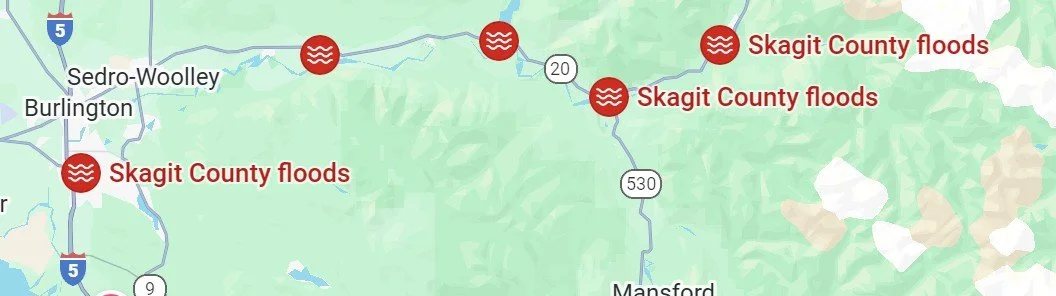
Skagit County Flood Map 12/18/25